





Manufacturer's description
Introducing the Field Kit by KOMA Elektronik – an electroacoustic box of wonders that unleashes a world of possibilities! Play with motors, sensors, contact microphones, radio signals!
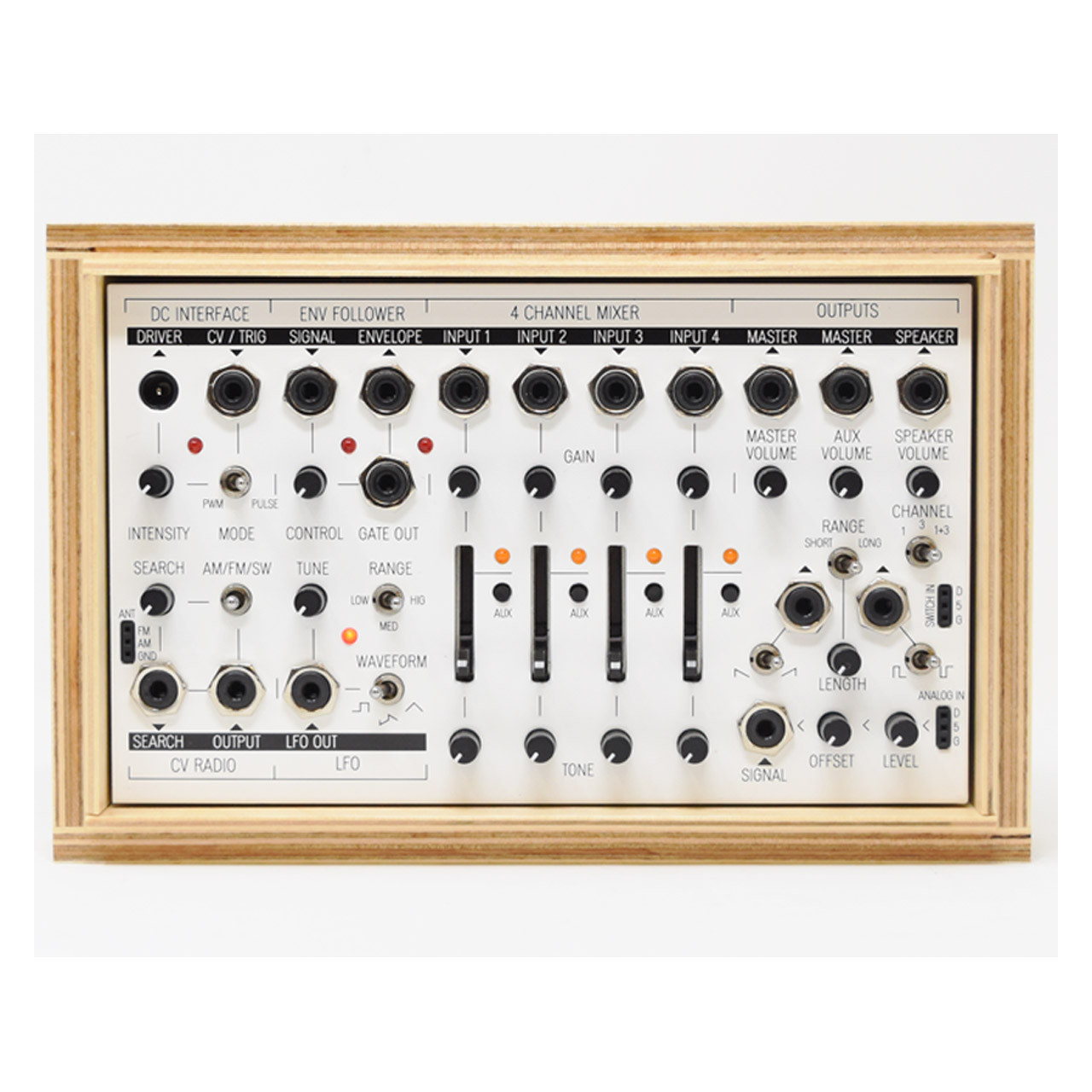
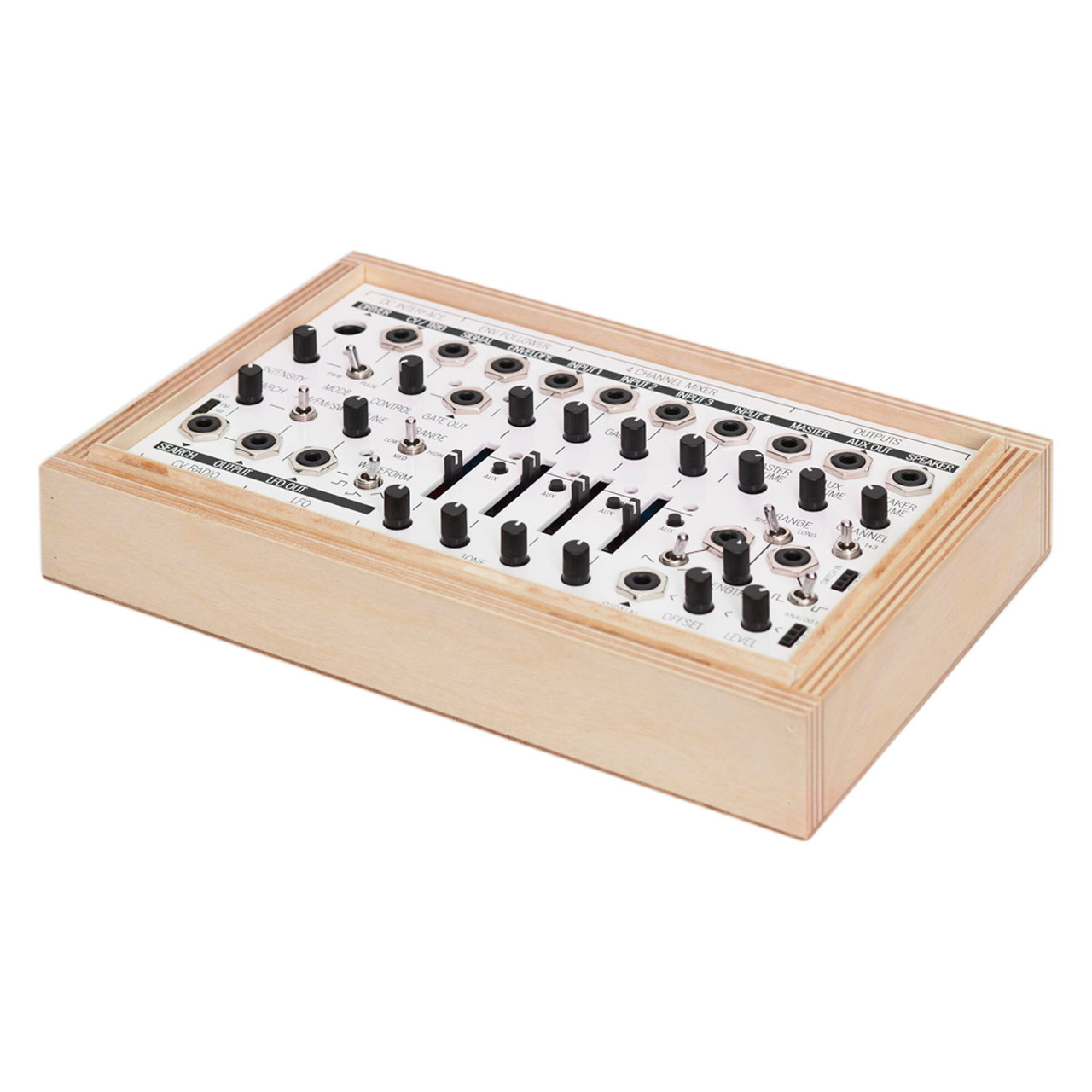
Much like a versatile Swiss knife, the Field Kit boasts a plethora of functions, serving you an 4-channel mixer, LFO, a CV-able Radio, Envelope Follower, a sensor interface, and a DC interface – a comprehensive toolkit for sonic experimentation.
The new KOMA Elektronik Field Kit is the perfect tool for everyone who would like to experiment with electro acoustic sound. Use everyday objects, amplify them and use them to make sound, like our heroes John Cage and David Tudor used to do!
The Field Kit is optimized to process signals from microphones, contact microphones, electromagnetic pickups and able to run DC motors and solenoids. On top of that it can receive radio signals and convert signals from switches and sensors into control voltage!
Let’s get more detailed…
The Field Kit boasts 7 separate functional blocks all focussed on receiving or generating all types of signals. They are designed to operate together as a coherent electroacoustic workstation or alternatively together with other pieces of music electronics with the ability to use control voltage signals.
The Field Kit is capable of doing a lot of different things! Let us run your through its functions, first there is the Four Channel Mixer:
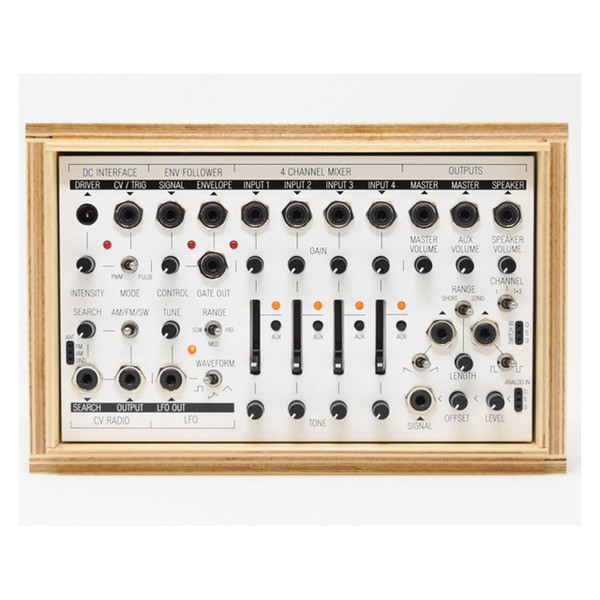
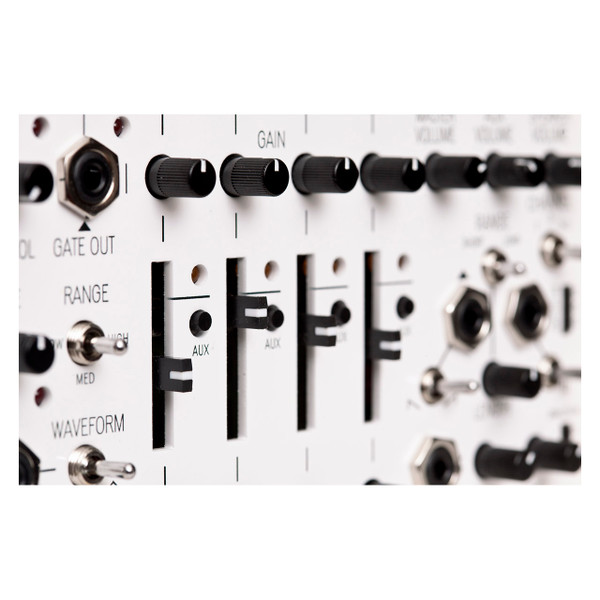
The Four Channel Mixer is the beating heart of the Field Kit, providing a fully functional mixer with individual Gain, Mix Level and Tone control over each channel and individual Master- and Aux sub-mixes.
The level of the Master and Aux Channels can be set with the Master Volume and Aux Volume controls and the channels being sent to the Aux sub-mix can be set with dedicated Aux Select-buttons. The Aux sub-mix is pre-fader.
For the noise heads amongst you: the mixer can be used very well for feedback mixing and no-input mixing as well; there is plenty of Gain to play with and the Tone control is a passive Low/Hi Pass filter drastically changing the sound.
AM/FM/SW Radio with CV Search function
The CV Radio is a CV-controllable radio receiver capable of receiving radio frequencies on AM/FM and SW bands. Additionally it provides the ability to catch electromagnetic waves for further processing inside the Field Kit. The frequency of the radio can be set with a dedicated multifunctional Search-control which acts both as a manual CV-source and as an input attenuator for a CV-signal.
The Field Kit comes with three connectors to attach needed antenna’s for both FM and SW bands and a loop antenna connector for AM signals.
Envelope Follower with CV and Gate Out
The Envelope Follower in the Field Kit applies two functions to the waveform you send to the input: full-wave rectification (mirroring of negative portions of the waveform) and low-pass filtering (averaging). It can also be used for frequency doubling of a signal, which is a great tool to have in the electroacoustic domain.
In addition to the Envelope Out, the Envelope Follower inside the Field Kit also gives out a gate signal whenever the level of the input signal is high enough. The input signal level can be set with a dedicated Attenuation-control.
Low Frequency Oscillator (LFO)
The Low Frequency Oscillator generates periodically varying voltages to be used as control signals. The output waveform can be set with a three-position Waveform-control and gives out either a Square-, Triangle- or a mix of Square and Triangle waveforms.
The frequency of the LFO can be set together with a dedicated Frequency-control and a three-position Range-control. With the higher range-settings, the frequency of the LFO reaches into the audio-range so the LFO can also be used as a simple drone sound source, send this is into a delay effect and you can make trippy sounds for hours!
DC Interface
A very cool function of the Field Kit is the DC Interface. You can use its output voltages to run little motors, fans, solenoids, buzzers and control them with control voltage signals. You can pick up the vibrations and electromagnetic waves with the contact microphones and electromagnetic pickup.
The DC Interface can be used together with PWM (Pulse Width Modulation)- or Pulse-controlled devices. An example of a PWM-controlled device is a DC-motor of which the rotation speed can be set by varying the pulse width. A Pulse-controlled device can be a solenoid-motor whose impulse strength/distance can be set with the length of the control pulse. Other devices that can be used together with the DC Interface could be computer fans, LEDs, relay switches, etc.
Here are a few things you can use with the DC Interface:
The operation mode of the DC Interface can be set with a two-position Mode-switch and there is a multifunctional Intensity-control and a CV/Trigger-input whose functions are dependent on the mode of use and whether a jack is present at the CV/Trigger-input.
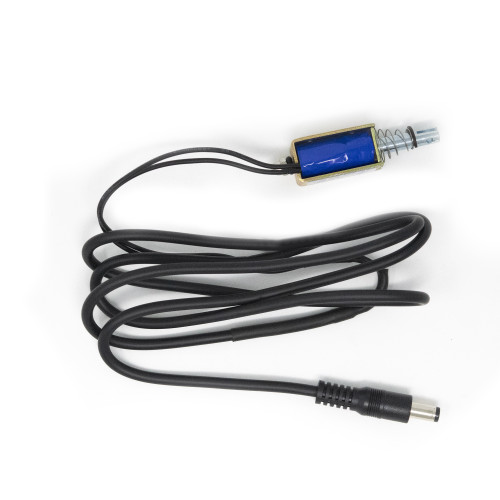
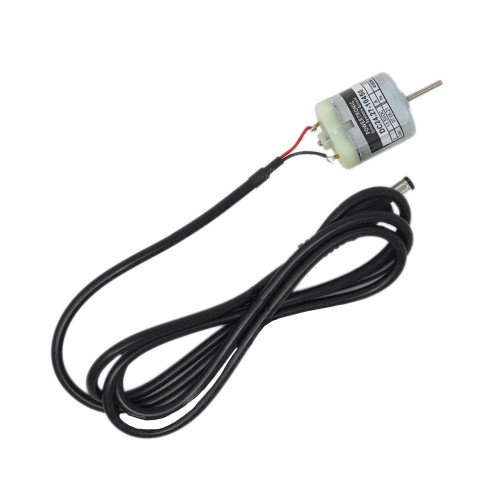
The Field Kit Expansion Pack comes with both a prepared DC-motor and a prepared solenoid-motor ready to be used together with the DC Interface or alternatively the user can prepare devices on his/her own.
Signal Interface
The Signal Interface is a nifty toolset to transform the raw signals of a wide variety of sensors and switches into signals that can be used with the Field Kit or other gear. This means you can trigger or control sound by light, heat, humidity, distance, speed, acceleration, proximity, pressure, force, level, all depending on what type of switch or sensor you are using! Ideal for sound installations!
The Signal Interface consists of two parts, the Switch and the Sensor Interface.
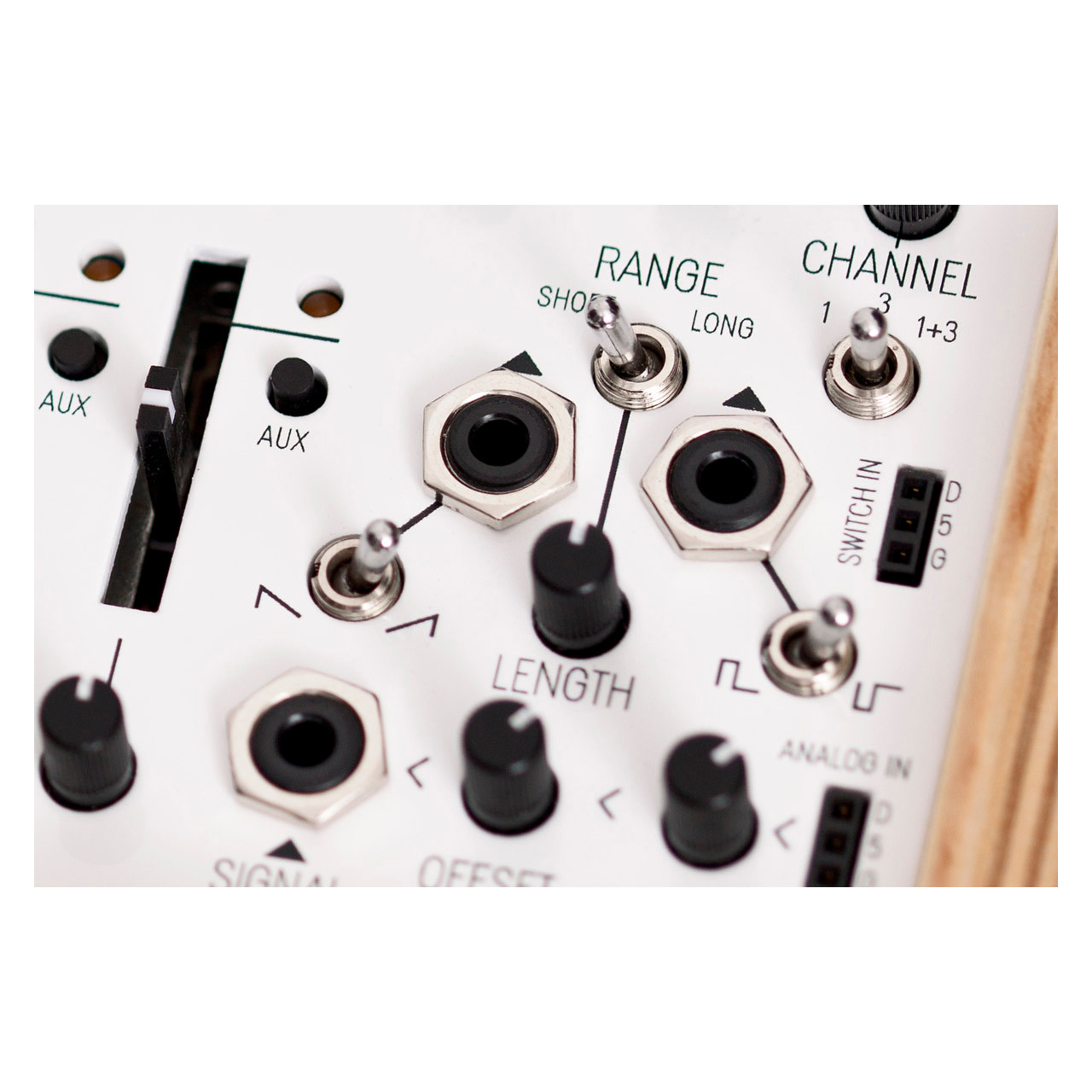
The Switch Interface transforms signals from different switches like buttons, ball- or tilt-switches etc. into four different types of gate signals. It can output gates, inverted gates, ramp or sawtooth triggers of adjustable length (1ms to 1s). It has two outputs that can be used at the same time, so you could drive a motor and scan the CV Radio with the same switch! The output-voltage spans a range from 0V to about 8V.
The Sensor Interface is made to manipulate the output voltage of analog sensors, like light-, heat- or distance-sensors and convert their signals into control voltage. It can amplify or attenuate the incoming signal and add a DC-offset, so you can for instance set the motor to a constant speed and make it run faster by outputting a higher voltage from the sensor.
The maximum output-voltage is about 8V. It provides enough current to power an Arduino!
Included with the Field Kit
- Field Kit Boxed version
- 9V power adapter (100V – 240V, EU/US/UK/AU versions depending on shipping location)
- Book/manual “50 Ways to Use the Field Kit”
- Four self-adhesive rubber feet
How much is my shipping?
Shipping is automatically calculated before you submit your payment information. Simply add items to your cart and proceed to the checkout page, where you'll be offered shipping options and their prices. In the UK, 'next working day' shipping is free to most parts of the UK if the order value is over £150, and £5 otherwise. We can also ship on a 'next working day before 12pm' service, which costs £6 for orders over £150 and £7.50 for orders under £150.
Certain areas of the UK, including the Scottish Highlands and Islands, Northern Ireland and other offshore islands, may have higher shipping charges and slightly longer delivery times due to surcharges applied by the courier and reduced service availability in those areas. We try to keep these costs to a minimum.
Do you ship to my country?
Almost certainly - the site will give you an estimate of shipping costs if you add an item to the cart and then enter your country and postcode. If you have specific requirements (such as if you prefer UPS over FedEx, for example) then let us know in advance and we'll try to work something out for you.
Shipping methods
We use a combination of DPD and Royal Mail for the UK, and for international orders it's either DPD, DHL, FedEx, UPS or Royal Mail depending on where you are in the world. If you have a particular preference then try to let us know BEFORE you order so we can look into it for you. Please note that there may occasionally be additional shipping charges if you live in a remote area, depending on what surcharges are applied by the shipper. We'll get in touch to discuss this with you in such cases.
Dispatch times
For UK orders, we normally dispatch the same working day if we get the order before 16:00. If you have a really urgent situation then of course drop us an email before ordering and we'll always do our absolute best to accommodate you.
Please note that 'next day' delivery is an aim, not a guarantee. The vast majority of orders shipped on a 'next day' service do arrive the next day, but occasionally couriers experience unforeseen delays due to weather or traffic conditions etc.
For international orders, we normally dispatch the same day if we get the order before 13:00 but again, occasionally it might be the next day before we can send it out, and sometimes the couriers may come to collect a little earlier than scheduled which would also push an order into the next day.
Saturday/Sunday delivery
If you're in the UK and you order before 16:00 on a Friday then we can send something for a Saturday or Sunday delivery with DPD. This is FREE for order values over £350, £5 for order values between £75 and £250, and £7 for order values under £75. (NB: this applies to UK mainland addresses only). Please note that any orders placed after 16:00 on a Friday will ship on the Monday.
International shipping times
Most orders are delivered within 3 to 5 working days if sent on a courier service. Royal Mail services can take a lot longer and are often less secure.
Pre-orders
If a product is listed as a pre-order, it means we've ordered it from the supplier but it's not physically in stock yet. The product listing will include an estimated shipping date based on the best information we have from the supplier, but do bear in mind this is subject to change and is not a guaranteed date.
If you place an order containing a mixture of in-stock and pre-order items, we'll normally hold off on shipping anything until the pre-order item(s) have arrived, rather than splitting it into multiple shipments. If you need the in-stock items sooner, we'd recommend placing separate orders. As always, please get in touch if you have questions.
Product Overview
Manufacturer's description
Introducing the Field Kit by KOMA Elektronik – an electroacoustic box of wonders that unleashes a world of possibilities! Play with motors, sensors, contact microphones, radio signals!
Much like a versatile Swiss knife, the Field Kit boasts a plethora of functions, serving you an 4-channel mixer, LFO, a CV-able Radio, Envelope Follower, a sensor interface, and a DC interface – a comprehensive toolkit for sonic experimentation.
The new KOMA Elektronik Field Kit is the perfect tool for everyone who would like to experiment with electro acoustic sound. Use everyday objects, amplify them and use them to make sound, like our heroes John Cage and David Tudor used to do!
The Field Kit is optimized to process signals from microphones, contact microphones, electromagnetic pickups and able to run DC motors and solenoids. On top of that it can receive radio signals and convert signals from switches and sensors into control voltage!
Let’s get more detailed…
The Field Kit boasts 7 separate functional blocks all focussed on receiving or generating all types of signals. They are designed to operate together as a coherent electroacoustic workstation or alternatively together with other pieces of music electronics with the ability to use control voltage signals.
The Field Kit is capable of doing a lot of different things! Let us run your through its functions, first there is the Four Channel Mixer:
The Four Channel Mixer is the beating heart of the Field Kit, providing a fully functional mixer with individual Gain, Mix Level and Tone control over each channel and individual Master- and Aux sub-mixes.
The level of the Master and Aux Channels can be set with the Master Volume and Aux Volume controls and the channels being sent to the Aux sub-mix can be set with dedicated Aux Select-buttons. The Aux sub-mix is pre-fader.
For the noise heads amongst you: the mixer can be used very well for feedback mixing and no-input mixing as well; there is plenty of Gain to play with and the Tone control is a passive Low/Hi Pass filter drastically changing the sound.
AM/FM/SW Radio with CV Search function
The CV Radio is a CV-controllable radio receiver capable of receiving radio frequencies on AM/FM and SW bands. Additionally it provides the ability to catch electromagnetic waves for further processing inside the Field Kit. The frequency of the radio can be set with a dedicated multifunctional Search-control which acts both as a manual CV-source and as an input attenuator for a CV-signal.
The Field Kit comes with three connectors to attach needed antenna’s for both FM and SW bands and a loop antenna connector for AM signals.
Envelope Follower with CV and Gate Out
The Envelope Follower in the Field Kit applies two functions to the waveform you send to the input: full-wave rectification (mirroring of negative portions of the waveform) and low-pass filtering (averaging). It can also be used for frequency doubling of a signal, which is a great tool to have in the electroacoustic domain.
In addition to the Envelope Out, the Envelope Follower inside the Field Kit also gives out a gate signal whenever the level of the input signal is high enough. The input signal level can be set with a dedicated Attenuation-control.
Low Frequency Oscillator (LFO)
The Low Frequency Oscillator generates periodically varying voltages to be used as control signals. The output waveform can be set with a three-position Waveform-control and gives out either a Square-, Triangle- or a mix of Square and Triangle waveforms.
The frequency of the LFO can be set together with a dedicated Frequency-control and a three-position Range-control. With the higher range-settings, the frequency of the LFO reaches into the audio-range so the LFO can also be used as a simple drone sound source, send this is into a delay effect and you can make trippy sounds for hours!
DC Interface
A very cool function of the Field Kit is the DC Interface. You can use its output voltages to run little motors, fans, solenoids, buzzers and control them with control voltage signals. You can pick up the vibrations and electromagnetic waves with the contact microphones and electromagnetic pickup.
The DC Interface can be used together with PWM (Pulse Width Modulation)- or Pulse-controlled devices. An example of a PWM-controlled device is a DC-motor of which the rotation speed can be set by varying the pulse width. A Pulse-controlled device can be a solenoid-motor whose impulse strength/distance can be set with the length of the control pulse. Other devices that can be used together with the DC Interface could be computer fans, LEDs, relay switches, etc.
Here are a few things you can use with the DC Interface:
The operation mode of the DC Interface can be set with a two-position Mode-switch and there is a multifunctional Intensity-control and a CV/Trigger-input whose functions are dependent on the mode of use and whether a jack is present at the CV/Trigger-input.
The Field Kit Expansion Pack comes with both a prepared DC-motor and a prepared solenoid-motor ready to be used together with the DC Interface or alternatively the user can prepare devices on his/her own.
Signal Interface
The Signal Interface is a nifty toolset to transform the raw signals of a wide variety of sensors and switches into signals that can be used with the Field Kit or other gear. This means you can trigger or control sound by light, heat, humidity, distance, speed, acceleration, proximity, pressure, force, level, all depending on what type of switch or sensor you are using! Ideal for sound installations!
The Signal Interface consists of two parts, the Switch and the Sensor Interface.
The Switch Interface transforms signals from different switches like buttons, ball- or tilt-switches etc. into four different types of gate signals. It can output gates, inverted gates, ramp or sawtooth triggers of adjustable length (1ms to 1s). It has two outputs that can be used at the same time, so you could drive a motor and scan the CV Radio with the same switch! The output-voltage spans a range from 0V to about 8V.
The Sensor Interface is made to manipulate the output voltage of analog sensors, like light-, heat- or distance-sensors and convert their signals into control voltage. It can amplify or attenuate the incoming signal and add a DC-offset, so you can for instance set the motor to a constant speed and make it run faster by outputting a higher voltage from the sensor.
The maximum output-voltage is about 8V. It provides enough current to power an Arduino!
Included with the Field Kit
- Field Kit Boxed version
- 9V power adapter (100V – 240V, EU/US/UK/AU versions depending on shipping location)
- Book/manual “50 Ways to Use the Field Kit”
- Four self-adhesive rubber feet
Technical Specs
Shipping Details
How much is my shipping?
Shipping is automatically calculated before you submit your payment information. Simply add items to your cart and proceed to the checkout page, where you'll be offered shipping options and their prices. In the UK, 'next working day' shipping is free to most parts of the UK if the order value is over £150, and £5 otherwise. We can also ship on a 'next working day before 12pm' service, which costs £6 for orders over £150 and £7.50 for orders under £150.
Certain areas of the UK, including the Scottish Highlands and Islands, Northern Ireland and other offshore islands, may have higher shipping charges and slightly longer delivery times due to surcharges applied by the courier and reduced service availability in those areas. We try to keep these costs to a minimum.
Do you ship to my country?
Almost certainly - the site will give you an estimate of shipping costs if you add an item to the cart and then enter your country and postcode. If you have specific requirements (such as if you prefer UPS over FedEx, for example) then let us know in advance and we'll try to work something out for you.
Shipping methods
We use a combination of DPD and Royal Mail for the UK, and for international orders it's either DPD, DHL, FedEx, UPS or Royal Mail depending on where you are in the world. If you have a particular preference then try to let us know BEFORE you order so we can look into it for you. Please note that there may occasionally be additional shipping charges if you live in a remote area, depending on what surcharges are applied by the shipper. We'll get in touch to discuss this with you in such cases.
Dispatch times
For UK orders, we normally dispatch the same working day if we get the order before 16:00. If you have a really urgent situation then of course drop us an email before ordering and we'll always do our absolute best to accommodate you.
Please note that 'next day' delivery is an aim, not a guarantee. The vast majority of orders shipped on a 'next day' service do arrive the next day, but occasionally couriers experience unforeseen delays due to weather or traffic conditions etc.
For international orders, we normally dispatch the same day if we get the order before 13:00 but again, occasionally it might be the next day before we can send it out, and sometimes the couriers may come to collect a little earlier than scheduled which would also push an order into the next day.
Saturday/Sunday delivery
If you're in the UK and you order before 16:00 on a Friday then we can send something for a Saturday or Sunday delivery with DPD. This is FREE for order values over £350, £5 for order values between £75 and £250, and £7 for order values under £75. (NB: this applies to UK mainland addresses only). Please note that any orders placed after 16:00 on a Friday will ship on the Monday.
International shipping times
Most orders are delivered within 3 to 5 working days if sent on a courier service. Royal Mail services can take a lot longer and are often less secure.
Pre-orders
If a product is listed as a pre-order, it means we've ordered it from the supplier but it's not physically in stock yet. The product listing will include an estimated shipping date based on the best information we have from the supplier, but do bear in mind this is subject to change and is not a guaranteed date.
If you place an order containing a mixture of in-stock and pre-order items, we'll normally hold off on shipping anything until the pre-order item(s) have arrived, rather than splitting it into multiple shipments. If you need the in-stock items sooner, we'd recommend placing separate orders. As always, please get in touch if you have questions.