Using effects pedals with synths, drum machines and Eurorack
Table of Contents
The right effects pedals can do anything from lightly enhancing your sound to totally transforming it. Many people think of pedals as guitar gear first, but put one after a synth, a drum machine or your modular and it can bring out things you never expected. Decades of tinkering by hundreds of makers mean there's a pedal for just about every sound you can imagine, and plenty you can't. Here's how to get going, plus a few of our favourites.
Why we love using pedals and synths together
Most pedals put everything on the front panel: a few knobs, maybe a switch or two. You tweak them with your hands (or feet!) while the music plays, similar to using a synth or a drum machine. They're modular in their own right, too. Chain them in any order, swap one out, put the delay before the fuzz instead of after, and you've got a completely different sound. If you like patching, you'll feel right at home.
Pedals have bags of character. Years of obsession have gone into things like how a delay should smear or how a fuzz should break up. A digital synth or drum machine often sounds even more alive through a tape-style echo, a spring reverb or a bit of drive. Classic versions of each of those exist in pedals.
Aside from what effect you want there are some other things we often consider when choosing a pedal.
Where the pedal goes
There are four common places to put a pedal, and each one changes what it does to your music.
- Straight after a synth. Synth output into the pedal, pedal into your mixer or interface. The whole sound goes through the effect, so this suits drive, fuzz, filters and modulation that should become part of the instrument's sound.
- On a single output of a drum machine (or multi-part synth). If your drum machine has multiple outputs, put a pedal on just one part, such as the snare. A spring reverb on the snare or a short delay on the hats changes the feel of a pattern without washing out other elements, such as the kick.
- On a mixer send. Send a little of each channel to the pedal and bring its output back on a return or a spare channel. The dry sound stays the same, and you choose how much of each instrument goes into the effect. This is the classic way to share one reverb or delay across a whole setup.
- From your DAW. Got an audio interface with spare outputs? Send a track out to a pedal and record it back in on a spare input. Ableton Live's External Audio Effect and Logic's I/O plug-in are made for this, and both can correct for the small delay the round trip adds. Interface outputs are line level, so you might need to turn the output down or use a reamp box so the pedal isn't hit too hard.
The accepted thought on pedal positions is drives, fuzzes and filters go in line, straight after the instrument. Reverbs and delays usually work best on a send.
We encourage breaking with tradition and getting freaky.
Setting the levels on a send
- Set the pedal's mix to fully wet. The mixer already carries the dry sound, so the pedal only needs to return the effect.
- Turn the send up until the pedal gets a decent signal without distorting. Some pedals have a clip light like on a mixing desk, or you will hear it crackle.
- Use the return level, not the send, to decide how much effect you hear.
- Set each channel's send to taste. Keep the kick and bass low or off on a reverb send so the low end stays tight.
- Effect sends are usually post-fader, so the effect follows the channel. Turn a channel down and its reverb goes down with it.
Mono or stereo: what's best for me?
Choosing between a mono and stereo version of the same effect depends on what you're feeding in and what the pedal does. Most guitar pedals are mono, and so are many mixer sends, as well as (obviously) mono synths and individual drum machine outputs. If your sound is mono, a mono pedal loses nothing, so drives, fuzzes and filters are fine in mono.
For reverbs and delays, go stereo if you want things to sound bigger. You don't need a stereo input, though. A pedal with a mono input and stereo outputs will do. Feed it from a mono send and it returns a wide stereo reverb or ping-pong delay, which can make things sound wider. Plenty of pedals work this way, including the Strymon BlueSky V2, El Capistan V2 and Deco V2, and the Death By Audio Dream Station.

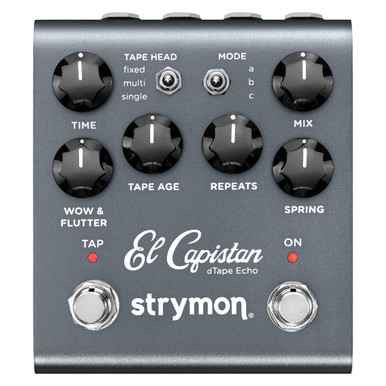
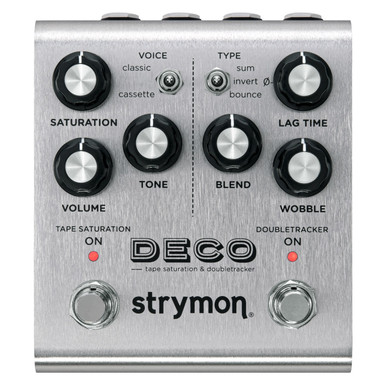

Go for stereo in and out when the stereo is already part of the sound, such as a wide pad. If you run that through a mono pedal, it all lands in the middle. On a fuzz or a filter you're reshaping the sound anyway, so that's often fine.
Stereo drums and phase
Sending a stereo drum mix into a stereo effect isn't wrong in itself, but it can lead to phase problems. If the pedal returns any of the dry sound, that copy arrives a fraction later than the dry mix, because digital pedals add a tiny delay. The two copies partly cancel each other out, and kicks and snares go thin and hollow. Very wide stereo effects can also cancel when the track is played in mono, on a club system or a phone speaker.
The reliable answer is a mono send and a stereo return. Your drums stay exactly where you panned them, the kick stays in the middle, and the width comes only from the effect. Plenty of mixers are built this way. In Eurorack, the XAOC Praga has two aux sends with stereo returns, and the ALM Mega-Tang has a mono send with a stereo return. Whichever you use, set the pedal to fully wet.
XAOC Devices Praga Eurorack Mixer Module
£389.00
Praga is an expandable four-channel voltage controlled mixer featuring a stereo mixing bus, two auxiliary sends with stereo returns, clickless muting, dedicated modes for unipolar… read more
Shop now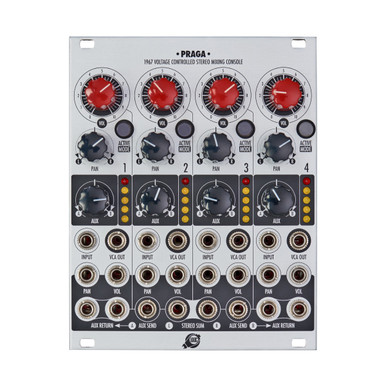
ALM Busy Circuits Mega-Tang Eurorack Mixer Module
£239.00
The ‘Mega-Tang’ is a 4-channel linear VCA and stereo mixer providing per input control over level, effect send, pan and muting. Designed for live use… read more
Shop now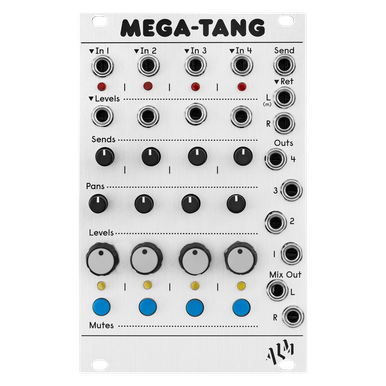
| Your sound | Your pedal | What happens | What to do |
|---|---|---|---|
| Mono | Mono | Nothing lost | Go ahead |
| Mono | Mono in, stereo out | Mono goes in, stereo comes out | Put it after any mono pedals, or on a send |
| Stereo | Mono | The stereo image collapses | Use it on a send so the dry stays stereo, or on single voices before they're panned |
| Stereo | Stereo in and out | Width is kept | Fine on synths. On a drum mix, use a mono send and set the pedal fully wet |
To keep it simple you can put mono pedals such as fuzz, drive, compression and filters early in the chain. Save the stereo reverb or delay for the end or a send, so it spreads the sound once everything else has happened.
Getting the levels right
Usually pedals are built for the low signal that comes out of a guitar. A synth or drum machine at line level is hotter than that, and Eurorack is hotter again. Too much level into a pedal makes it distort early (sometimes desirable), and too little can make it noisy.
- Synths and drum machines. Start with the instrument's volume at about half and bring it up until the pedal sounds right. A little extra level into a fuzz or drive is often exactly what you want; into a clean delay or reverb it can crackle.
- Pedals with a synth setting. Some pedals have a switch for line level. The Meris pedals in this guide all let you switch between instrument and synth level, which gives a hot synth signal more room.
- Eurorack. Modular audio is usually too hot for a pedal straight out of the case. It needs bringing down on the way out and back up on the way in, which is what the modules below do.
- Into your interface. A pedal's output is commonly an unbalanced instrument-level signal. Going into a line input is fine for most setups. For a long cable run or a mic input, a DI box such as the Strymon PCH X1 balances it properly.
Strymon PCH X1 Active DI Box
£180.00
Manufacturer's description The PCH X1 is a single-channel active direct interface. It is phantom-powered with transformer isolation, has a high-impedance buffered 1/4" input, a balanced… read more
Shop now
If you hear hum, it is usually a ground loop between the pedal's power supply, your modular and your mixer. Power pedals from an isolated supply rather than a daisy chain, keep audio cables away from power bricks, and use a DI box with a ground lift switch, like the PCH range, to break the loop.
Pedals and Eurorack
If you're using Eurorack, why not just use effect modules? Mostly it's for the range. Far more reverbs, delays, fuzzes and odd boxes are made as pedals than as modules, and a pedal takes up no room in your case, where every HP counts.
A modular system and a pedalboard can work as one instrument. Your case sends audio out to the pedals, and their output comes back in to be filtered, played through a VCA or modulated some more. All it takes is a module that drops the level on the way out and lifts it on the way back.
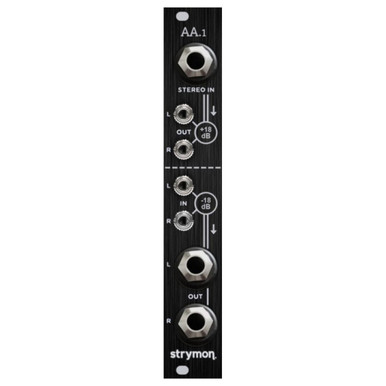
- Strymon AA1 (4HP). The simplest way in. It brings modular audio down by 18dB on the way to a pedal and lifts a pedal or guitar back up by 18dB on the way in.
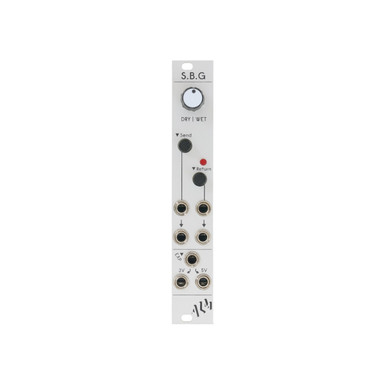
- ALM SBG Pro. A full send and return on proper 6.35mm jacks, mono or stereo, balanced or unbalanced, with level controls and clip lights. You can crossfade between the dry and returned sound by hand or with CV, so the pedal becomes something you can patch. It also has an expression output that keeps your CV within a range a pedal can take, so you can control the pedal from your case without risking it.
- ALM SBG. The original, smaller SBG. Level matching in both directions, a wet/dry crossfade and the same protected expression output, for a lot less money than the Pro.
- Intellijel Pedal I/O (1U). A send and return with gain on both sides that also matches impedance, so pedals and guitars see what they expect.
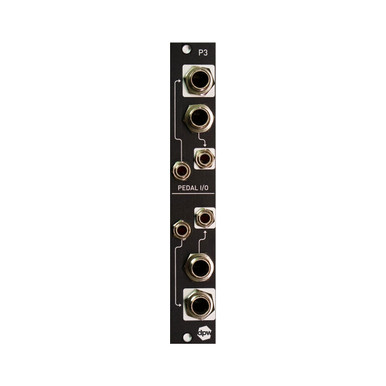
- DPW Design P3. Two independent channels, so you can run it as dual mono or as one stereo send and return. Soft clipping in both directions means a hot signal saturates rather than crackles.
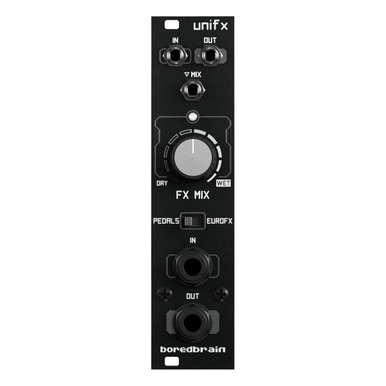
- Boredbrain UniFX. A send and return that scales the level about 12dB each way, with CV control over the dry/wet mix. Flip its switch and it works the other way round, so you can run a guitar or other instrument through your modules.
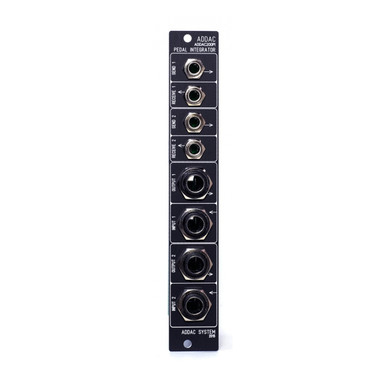
- ADDAC 200PI Pedal Integrator. Two independent sends and returns, so you can run two separate chains of pedals from your case.


You can power your pedals from the case too. The DPW Design P4 gives you four 9V outputs from your Eurorack power supply, as long as your case has the current to spare on its +12V rail.
DPW Design P4 Eurorack Pedal Power Module
£66.00
Manufacturer's description The P4 is a pedal power module that produces up to two times 1000 mA off 9V power intended to power pedals from… read more
Shop now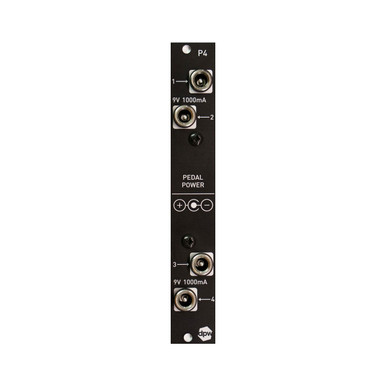
Once a pedal is patched in, try putting it inside a feedback loop, or sending its output through a filter or VCA before it reaches your mixer. If you would rather keep it all in the case, Strymon also make their tape delay and reverb as modules: the Magneto and the Starlab.
Strymon Magneto Eurorack Tape Delay
£566.00
Interstellar Space Machine.Create expansive soundscapes and evolving, otherworldly tones. Add layers upon layers of harmonic and rhythmic complexity within an enveloping stereo field. Infuse your… read more
Shop now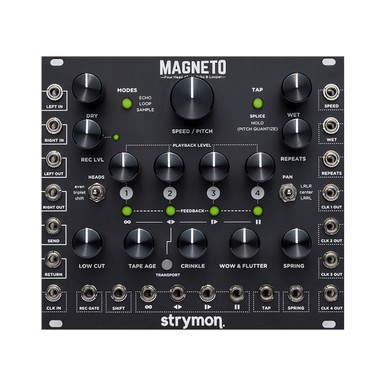
Strymon Starlab Eurorack Reverb Module (Blue)
£529.00
Modular Transformation Machine. Expand the sound of your modular rack with incredibly lush, ethereal reverbs. Enhance signals with gorgeous chorus, flanging, and modulated delays. Create… read more
Shop now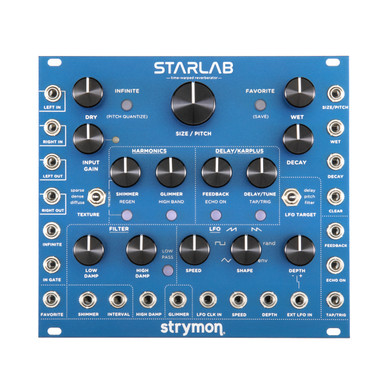
Playing the pedal, not just the knobs
A pedal gets far more interesting when something modulates it. Obviously you can use your hand, but there are plenty of other ways:
- Expression. Many pedals have an expression input for a foot pedal, which sweeps one or more settings while you play. An expression pedal like the Endorphin.es Plus 3 is ideal.
- CV from your modular. An expression input expects a foot pedal, not a modular voltage, so don't patch CV straight into it. A converter such as the ADDAC 309 or the expression output on the SBG Pro lets an LFO, envelope or sequencer play the pedal safely. Some pedals take CV directly: the Fairfield Long Life has CV inputs for frequency and resonance, and Roger That has CV on its tune control.
- MIDI and clock. Strymon's V2 pedals and Meris's X range have full MIDI, so a drum machine or sequencer can change presets and keep delays locked to the tempo. With several MIDI pedals, a hub like the Strymon Conduit takes 5-pin MIDI or USB from your gear and shares it across four pedals.



Tempo-synced delay on a drum machine is the clearest example here. Dotted eighths on the hats, locked to the pattern, sound great on almost anything.
Some of our favourites
Death By Audio
Hand-built in Brooklyn, Death By Audio make pedals that are loud, wild and somehow still musical. They are brilliant on music you want to sound a bit filthier.
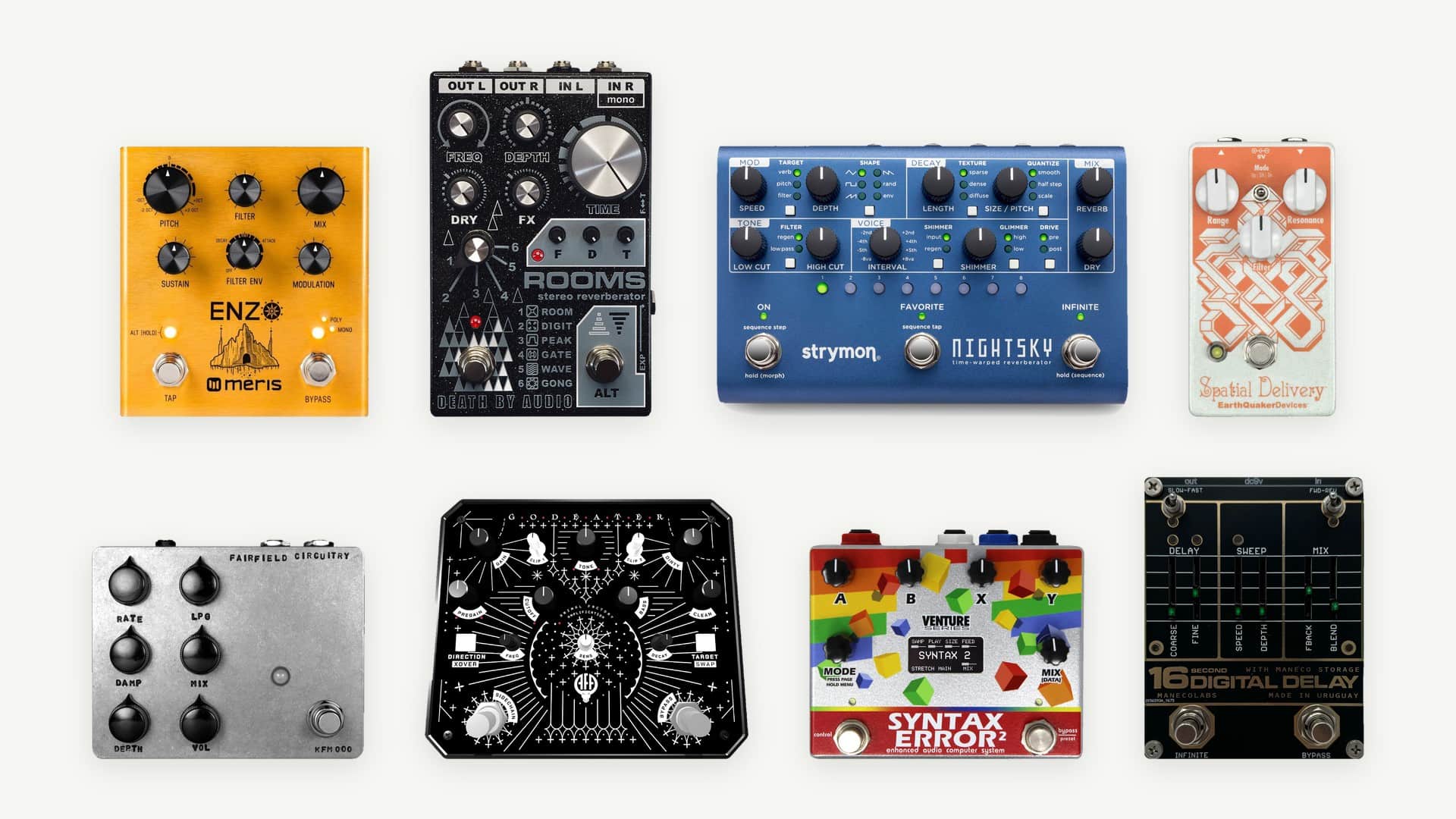
- Echo Dream II, £285. A delay with a modulator and a fuzz on the repeats, from gentle warble to shattered echoes.
- Dream Station, £254. Echo and reverb in a small box, with stereo ping-pong that turns a mono synth into something huge.
- Rooms, £399. A stereo reverb that goes from long, trailing spaces to gated walls of sound.
- Fuzz War, £185. Wall-of-sound fuzz that also does gentler drive with the fuzz turned down.


Strymon
Strymon's tape echoes and reverbs are on pedalboards everywhere, and they work just as well on a synth. All four below have stereo outputs and full MIDI, and Strymon make Eurorack modules too.
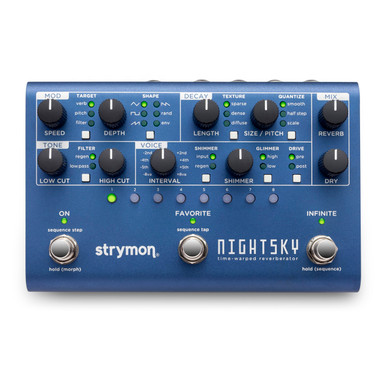
- NightSky, £374. An experimental reverb with a resonant filter and an eight-step sequencer, made for sound design.
- El Capistan V2, £349. Vintage tape echo with tape age, wow and flutter, plus a spring reverb and a looper.
- BlueSky V2, £318. Lush studio reverbs in mono or stereo, with 300 presets.
- Deco V2, £329. Tape saturation and double-tracking that gives a thin synth weight and movement.
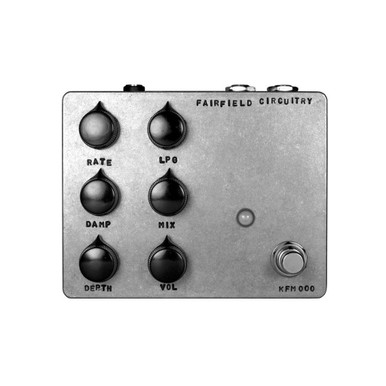
Fairfield Circuitry
From Montreal, Fairfield make pedals that wobble, drift and misbehave in the best way. People who have them love them, and so do we.
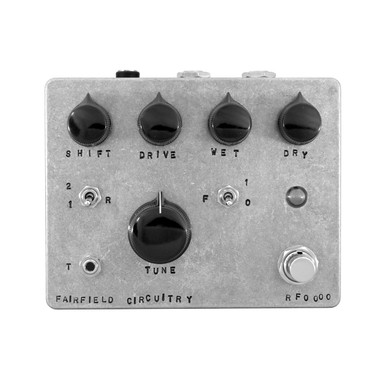
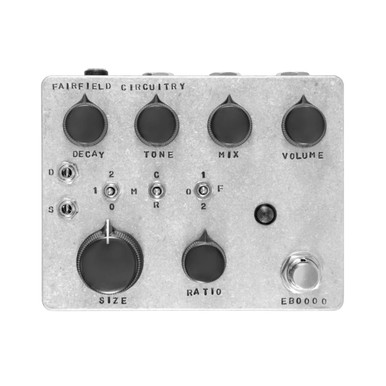
- Placeholder, £459. An all-analogue bucket brigade reverb that sometimes sounds like a delay. Our best-selling Fairfield.
- Shallow Water, £322. Random, never-repeating pitch wobble, like tape that has seen better days.
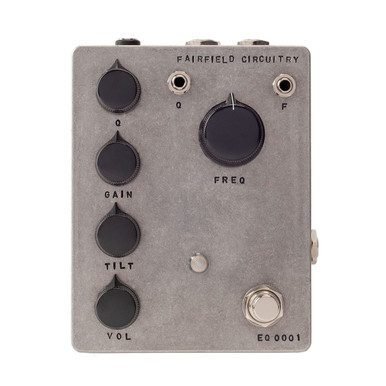
- Long Life, £299. A gritty one-band EQ with CV inputs, so you can play it from a modular.
- Hors d'Oeuvre?, £219. A feedback loop for your other pedals, for drones and self-oscillating noise.

Meris
Meris build some of the deepest digital pedals around, and several are designed with synths in mind. The X range takes stereo in and out, has full MIDI, and can be switched to synth level.
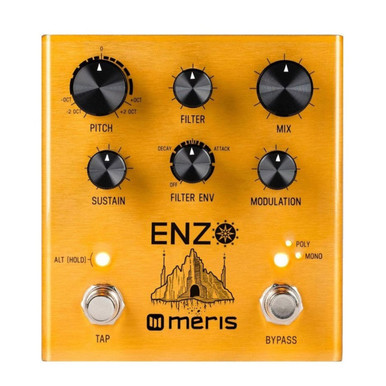
- Enzo, £283. A synth inside a pedal that tracks what you play. Great on drum machines and other synths.
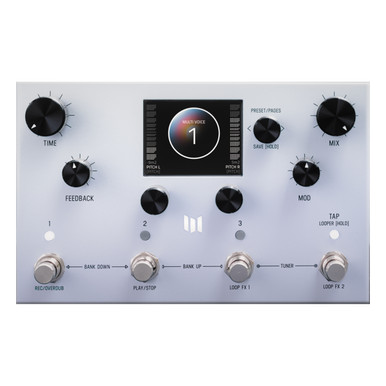
- LVX, £588. A modular delay system with a configurable stereo dual delay.
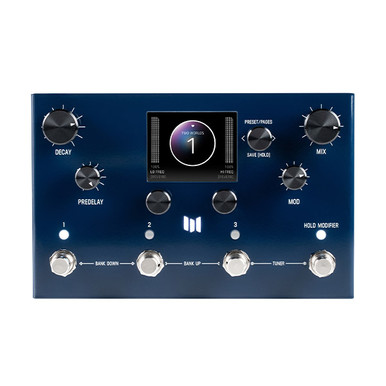
- Mercury X, £629. Eight Meris reverbs with modular routing and a wide stereo image.
- Ottobit X, £599. Stutters, tape stops, loopers and 80s lo-fi crunch, all in stereo.

More pedal brands we love
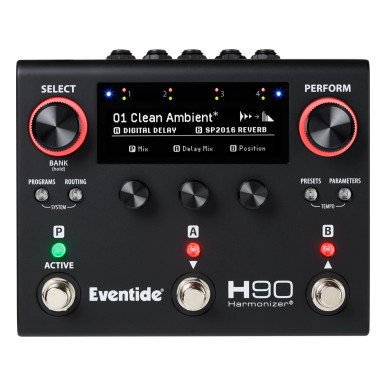
- Eventide. Studio-grade reverbs, delays and pitch effects, and they've been at it for five decades. Our pick is the H90, £776. It has 74 algorithms and hundreds of presets, with pitch shifting that stays clean even on chords. It's a lot of money, but it's a studio rack in a pedal.
- Vongon. Beautifully made echo, vibrato, filter and saturation boxes from a small Los Angeles maker. Our pick is Paragraphs II, £479, a four-pole low-pass filter built on the same ladder filter as Vongon's Replay synth, now in stereo. Its envelope follows how hard you play, so you get auto-wah on a synth line or ducking on a drum loop.
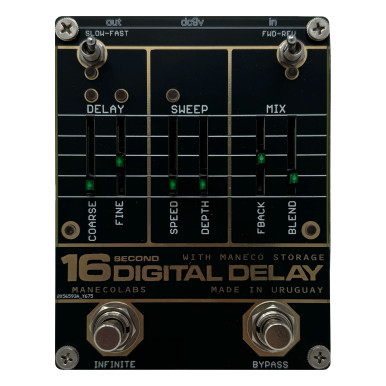
- Maneco Labs. Delays, fuzzes and drone machines from Spain. Our pick is the 16 Seconds, £299, a compact remake of a rare 1983 Electro-Harmonix delay with up to 32 seconds of delay. Everything is on sliders with no hidden menus, and sliding the time while it repeats bends the pitch, which is half the fun.
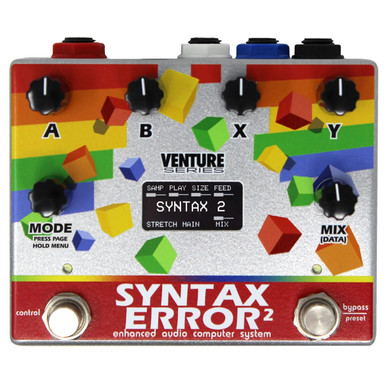
- Alexander Pedals. Compact pedals with a lot of sound and presets inside. Our pick is Syntax Error 2, £399: six modes of glitchy, lo-fi weirdness, from stretched samples and grainy reverb to ring mod and frequency shifting. An expression pedal or MIDI can morph every knob at once, and there's a mini sequencer for moving textures.
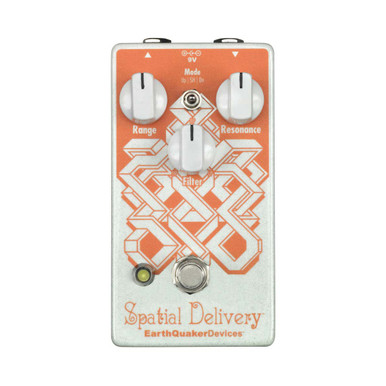
- EarthQuaker Devices. Ohio-made fuzzes, filters and modulation. Our pick is the Spatial Delivery V2, £185, an envelope filter that sweeps up or down with how hard you play. Its sample and hold mode jumps the filter around at random, which is lovely on a plucky synth line.
- Animal Factory. Heavy, characterful distortion and fuzz from India. Our pick is the Godeater+, £308, built to distort without losing the low end, so bass synths and kicks stay heavy. It has a wet/dry blend, a sidechain input that takes audio or CV, and MIDI.